

Whoa! I was poking around a transactions page the other night and somethin’ nudged me. My first instinct said: this is messy. Really messy. The logs were dense, the addresses looked like gobbledegook, and yet, buried in that noise, were patterns that mattered to traders, devs, and collectors alike.
Here’s the thing. A blockchain explorer is more than a block list. It’s a narrative — an ongoing story about value, intent, and community behavior. Medium tools show raw data. Good tools interpret it. Great tools let you chase a lead from a token mint to a whale’s wallet and down into an NFT drop in the same session, without losing your place.
Initially I thought all explorers were roughly interchangeable. But after using multiple platforms for months—toggling between speed tests in San Francisco coffee shops and late-night wallet debugging sessions (yes, I do that)—I started to see where Solana’s explorers really diverge and why that matters for token trackers and NFT tracking workflows.
Short version: not every explorer was built with token bridges, mempools, or Serum-style order books in mind. Some assume you only need transaction hashes. Hmm… that assumption was a bad fit for my workflows.
A practical look at what a token tracker should do
Okay, so check this out—imagine you want to follow a newly minted SPL token that just launched on Solana. You need to know: who minted it, which marketplaces list related NFTs, whether there are locked supply contracts, and whether big wallets are cynically dumping. You want that in a single-pane flow. Simple request, right? Not really.
On one hand you have speed—Solana is fast, and the explorer must keep up without lag. On the other hand, you need depth: decoded instructions, token metadata, and event logs. On a third hand (yes, another hand), you want UX that doesn’t require a doctorate in cryptography. My mind kept toggling between these needs as I tested features.
My instinct said a mix of automated heuristics and human-readable summaries would be best. Actually, wait—let me rephrase that: my instinct said give me heuristics, but show me the raw threads too. Don’t hide the receipts. Show both the headline and the footnote.
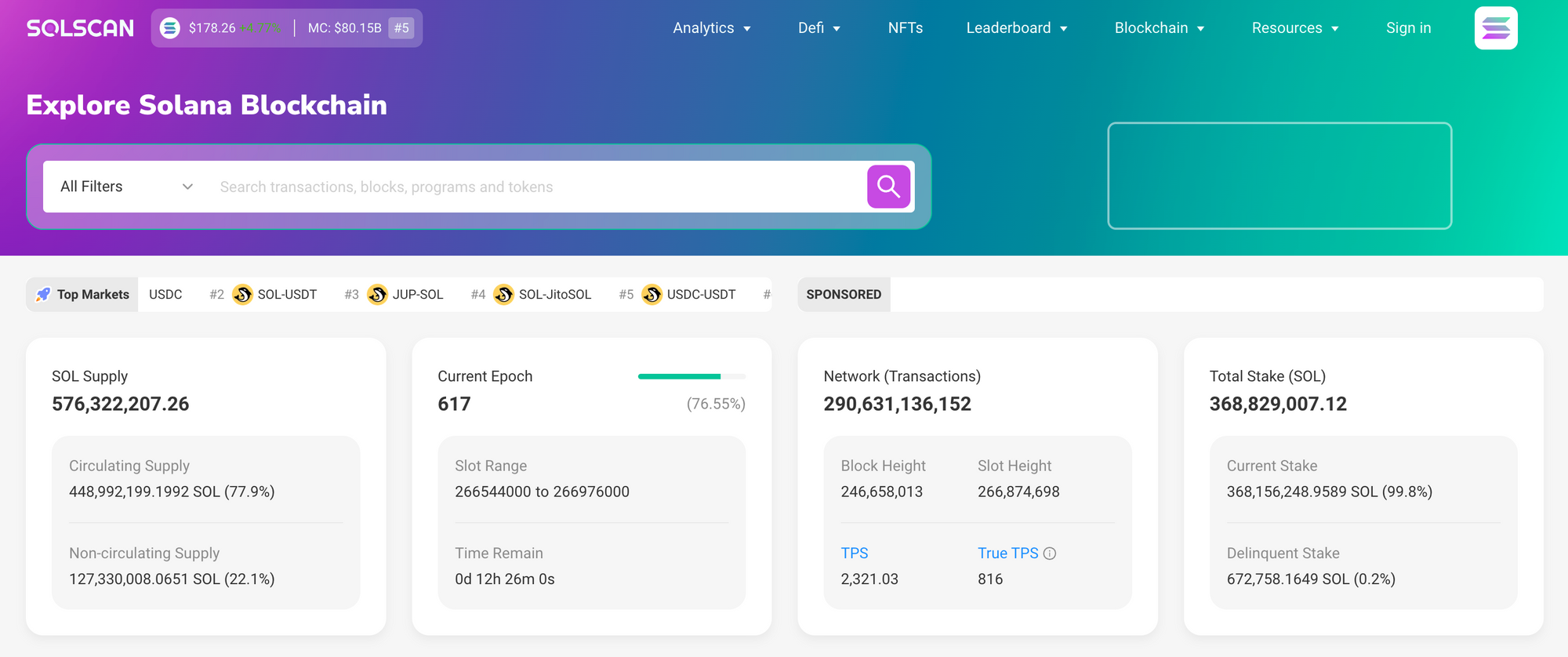
One platform that kept coming up in teams I respect was the solscan explorer official site. People talked about its clean token pages, and how quickly it decodes program instructions. I started leaning into that, tracking transfers, and comparing behavior across wallets and NFT marketplaces.
There’s something satisfying about watching a token’s transfer graph fill out in real time. Seriously? Yep. It tells you more than a static balance ever could.
Token tracking: what actually matters in the wild
Short look: supply events. Medium look: holder distribution, lockups, and whether tokens are in staking/timelocks. Deep look: program-level interactions like burns, mints from multiple mint authorities, and cross-program invocations that hint at rug pulls or coordinated airdrops.
What bugs me about many explorers is they surface data but not context. For example, seeing a sudden 500,000 token transfer is interesting only if you know whether those tokens were minted, moved from a vesting contract, or simply shuffled between hot wallets. I want the why, not just the what.
On the analytical side I ran into conflicting signals—on one hand the token had a high number of holders, though actually a few wallets held 90% of supply. On the other hand, recent liquidity events looked like organic market activity (but could’ve been obfuscated by wash trades). You learn to read between the lines.
Something felt off about a few “top holders” labels I saw elsewhere; the addresses were program-derived accounts used for on-chain bookkeeping. My first read labeled them whales. My second look flagged them as system ops. This kind of self-correction is routine for me now.
NFT tracking on Solana: it’s a different beast
NFTs are social objects. They live in communities, on marketplaces, and in Discord servers where rumors spread faster than transactions confirm. Tracking an NFT requires on-chain tracing plus off-chain context. You need to see mint history and wallet provenance, and you also need to know which marketplace listings are active.
Sometimes a floor-sweep is a simple transfer pattern. Other times it’s a smart contract with hooks that funnel royalties differently. I’m biased, but I think explorers should highlight royalty flows explicitly—because the community angle matters to collectors and to creators.
I’ll be honest: spotting mint bots used to feel like witchcraft. But with better token and NFT trackers you can correlate rapid sequential mints from similar user agents, and then filter those patterns out when you’re analyzing true collector behavior. Makes a big difference when you’re assessing real demand.
There’s a rhythm to reconciling on-chain facts with off-chain chatter. You cross-check timestamps, look for correlated actions across liquidity pools, and read market chatter (oh, and by the way sometimes that chatter is noise). It’s detective work more than mathematics.
Practical tips for power users
1) Start with decoded instructions. You want to know which program called what. Short and to the point. 2) Monitor holder concentration over time—not just snapshots. 3) Watch for program-derived accounts that mask operational flows. 4) Flag large swaps against known DEXs to spot potential rug signals.
Use alerts. Seriously? Absolutely. Set thresholds for abnormal token minting or for whale transfers. Your gut (and automation) will thank you when a sudden dump occurs at 3 AM and you wake to 20% slippage on a token you loved.
Pro tip: don’t assume a single explorer has all the answers. Cross-verify with program logs and RPC node reads. Initially I thought a single dashboard would be enough, but then I realized that redundancy saves reputations (and wallets).
Common questions from the trench
How do I verify a token’s legitimacy quickly?
Check mint authorities, view token metadata for off-chain links, and trace holder distribution. Look for multi-sig signers on treasury wallets. If metadata URLs point to blank pages or dead IPFS hashes, be cautious—scams often skimp on verifiable links.
Can I track NFTs across marketplaces in one place?
Mostly yes. A good tracker aggregates marketplace listings and shows where transfers happen. It won’t catch every off-chain private sale, but you’ll see on-chain settlement and provenance. Correlate those with Discord or Twitter calls for the full picture.
Which explorer should I use for deep dives?
I’m partial to explorers that balance speed with decoded program insights. The solscan explorer official site is a solid reference point for Solana, offering token pages and instruction decoding that makes deep dives much less painful.
So where does this leave us? I’m less naive now. On one hand explorers make data accessible. On the other, quality varies. You need tools that reveal both the headline events and the underlying program mechanics—because that’s where real signals hide.
Final thought (and then I’ll stop): the next generation of explorers will be social as much as technical. They’ll weave on-chain truth with community signal, and they’ll let you chase a lead from mint to marketplace to rumor to outcome without falling down a rabbit hole. I can almost taste it. Almost.
